
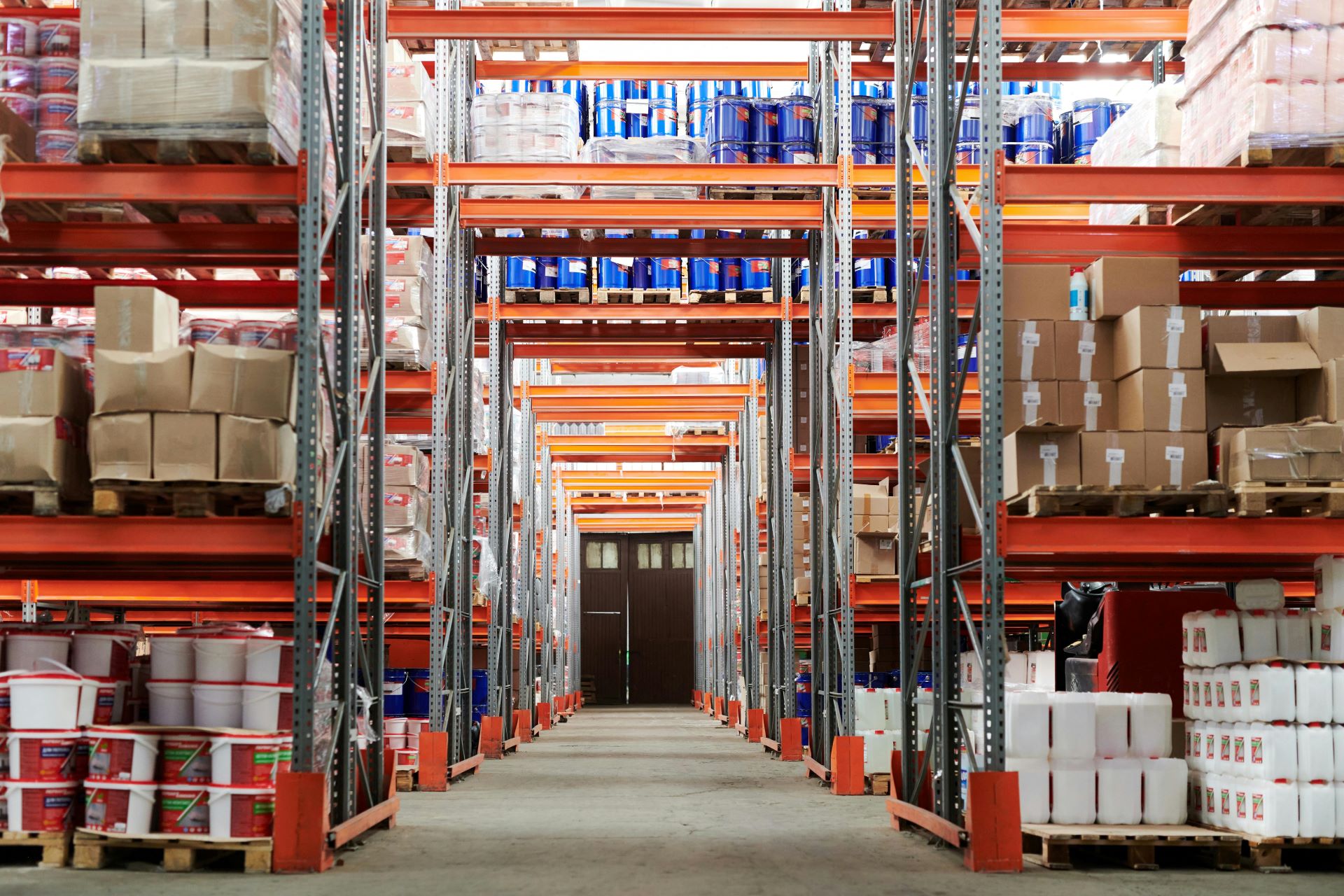
Maintaining Commercial Cold Storage Facilities in SA
Maintaining Commercial Cold Storage Facilities in SA
Commercial cold storage buildings are quiet guardians of modern food supply chains. From fresh produce waiting for export to pharmaceuticals that must remain within precise thermal boundaries, these facilities perform an invisible but essential service. In a country like South Africa, where agricultural output, retail distribution and export logistics rely heavily on refrigeration infrastructure, maintaining commercial cold storage buildings is not simply a technical task but a commercial necessity.
Temperature consistency is the central promise of any cold storage structure. Every fluctuation represents wasted energy, potential product damage and operational inefficiency. The stability of internal climate conditions depends primarily on two construction and maintenance variables: insulation thickness and door sealing quality. While compressors, refrigeration units and monitoring systems are critical, the building envelope itself forms the first line of defence against thermal drift.
Professional standards play an important role in guiding facility construction and maintenance. Guidelines from the South African Bureau of Standards influence material selection, thermal performance expectations and safety compliance across commercial storage projects. Understanding these standards helps building managers avoid costly structural mistakes while ensuring operational reliability.
This discussion explores how insulation strategy and door system integrity influence long-term performance in commercial cold storage buildings across South Africa’s diverse climatic zones.
The Importance of Temperature Consistency
Cold storage environments function like carefully balanced ecosystems. Even small thermal disturbances can trigger cascading problems. When warm air enters a refrigerated space, cooling equipment must work harder to restore equilibrium. This increases electricity consumption, accelerates mechanical wear and may compromise stored goods.
In South Africa, climate variation adds complexity. Coastal regions experience humidity-driven heat loads, while inland areas face intense daytime warming followed by cooler nights. Commercial cold storage facilities must therefore be designed with robust thermal resistance rather than minimal regulatory compliance.
Temperature consistency also protects product quality. Many agricultural exports depend on maintaining specific refrigeration windows during storage and transport preparation. If internal temperature oscillates, biological degradation processes can accelerate, shortening shelf life and reducing commercial value.
From a maintenance perspective, monitoring temperature stability should be a daily operational priority rather than an occasional inspection activity.
Insulation Thickness as the Primary Thermal Barrier
Insulation thickness is often misunderstood as a simple construction choice when it is actually a long-term performance investment. The building envelope functions as a slow-moving membrane that either resists or invites heat transfer.
Thicker insulation generally improves thermal resistance, but the relationship is not linear. Beyond a certain point, additional thickness provides diminishing returns unless paired with high-quality installation workmanship and material continuity.
Cold storage facilities commonly use polyurethane or similar closed-cell insulating materials because these offer low thermal conductivity and high structural durability. However, installation quality matters as much as material selection. Gaps, compression damage or poorly joined panels create thermal bridges that silently undermine the system.
In commercial refrigeration buildings, thermal bridges are the enemy of efficiency. They act like invisible rivers of heat flowing through structural weaknesses, forcing cooling systems to compensate continuously.
Maintenance teams should periodically inspect wall junctions, ceiling panel interfaces and floor-wall transitions. Any sign of condensation patterns often indicates insulation compromise.
In South African commercial construction contexts, thermal design must also account for electricity cost volatility. Energy expenditure is frequently the largest operational expense in cold storage operations, making insulation performance directly linked to profitability.
Choosing the Correct Insulation Thickness
Selecting insulation thickness depends on several operational factors. Facility purpose is the first consideration. A frozen storage warehouse operating at sub-zero temperatures requires stronger thermal resistance than a chilled produce facility.
External environmental exposure also influences design decisions. Buildings located in hotter inland regions typically require thicker insulation layers to counter persistent heat infiltration.
The expected turnover rate of stored goods is another variable. High-frequency loading and unloading facilities experience more door openings, which increases air exchange pressure. In such cases, thicker insulation acts as a buffer against unavoidable operational disturbance.
Maintenance managers should remember that insulation thickness alone cannot compensate for poor sealing systems. The building envelope must function as a unified thermal defence rather than a collection of isolated protective layers.
Door Sealing Systems and Thermal Leakage Control
If insulation walls are the fortress, doors are the gates. Unfortunately, doors are also the most vulnerable part of any cold storage building.
Every door opening allows warm external air to rush inward while cold internal air escapes. This exchange may last only seconds, but the cumulative effect across hundreds of daily operations can be substantial.
High-performance gasket systems are therefore essential. Magnetic sealing strips and compression rubber gaskets are commonly used because they maintain contact pressure even under repeated mechanical stress.
Sliding cold storage doors require special attention. Track alignment must be checked regularly because structural settlement or forklift impacts can gradually distort door movement pathways.
One of the most overlooked maintenance risks is damaged door frame insulation foam. When protective foam layers degrade, air pockets form around door edges, creating miniature convection currents that undermine refrigeration efficiency.
Operational staff should be trained to close doors gently but firmly. A door slammed repeatedly may not break immediately, but it slowly weakens sealing integrity like winter wind wearing away mountain rock.
Airlock Systems and Traffic Management
High-activity commercial storage buildings often benefit from airlock chamber designs. These transitional spaces function as thermal safety zones between exterior loading areas and refrigerated interiors.
Airlocks reduce direct airflow exchange during goods movement. In facilities where forklifts frequently transport pallets, airlocks can dramatically reduce cooling load spikes.
Traffic management inside cold storage complexes is equally important. Rapid, uncontrolled vehicle movement tends to increase door opening duration and frequency.
Floor marking systems and operational protocols help streamline loading operations. Efficient logistics behaviour is sometimes as important as construction quality in maintaining temperature consistency.
Roof Insulation and Solar Heat Management
In the South African climate, roof structures are major contributors to heat gain. Solar radiation can transform metal roofing surfaces into thermal radiators that slowly push heat downward into storage chambers.
Roof insulation should therefore be treated as an active performance component rather than passive building decoration. Multi-layer reflective insulation materials are often used to reduce radiant heat transfer.
Maintenance inspections must include roof fasteners and panel joints. Wind-driven vibration can loosen structural elements over time, allowing microscopic air pathways to develop.
Waterproofing is also critical. Moisture infiltration does not only threaten structural integrity but can also reduce insulation efficiency by altering material density and thermal conductivity.
Floor Construction and Subsurface Protection
Cold storage floors face unique mechanical and thermal stresses. They must support heavy pallet loads while resisting cold seepage into the ground.
Ground freezing is a serious risk in frozen storage facilities. Without proper subfloor insulation, moisture in the soil can freeze and expand, causing structural cracking and uneven surfaces.
Vapour barrier membranes are essential beneath concrete slabs. These membranes prevent moisture migration that could otherwise condense within insulation layers.
Routine floor inspections should check for hairline cracks, surface spalling and drainage efficiency around loading zones.
Mechanical Systems Are Not a Substitute for Building Quality
Refrigeration equipment should be viewed as a performance amplifier rather than the primary temperature control mechanism. Even the best compressor system cannot compensate for structural thermal leakage.
Energy efficiency in commercial cold storage depends on the harmony between mechanical cooling technology and physical building design.
Regular calibration of temperature sensors is also important. Faulty monitoring equipment may falsely indicate stable conditions while slow thermal drift continues unnoticed.
In modern facilities, digital building management systems are increasingly used to track environmental performance. These systems provide early warnings of insulation failure or sealing degradation.
Maintenance Scheduling for Long-Term Performance
Cold storage buildings require proactive maintenance philosophy rather than reactive repair culture.
Inspection schedules should include monthly sealing system checks, quarterly insulation surface evaluation and annual structural thermal performance testing.
Cleaning procedures are also important. Dust accumulation around door mechanisms and ventilation channels can interfere with sealing pressure and airflow dynamics.
Special attention must be given to forklift traffic impact zones. Mechanical collision damage is one of the leading causes of door frame distortion in commercial storage warehouses.
Cost Implications of Poor Maintenance
Neglecting insulation and sealing systems produces hidden financial losses. Increased electricity consumption is the most visible effect, but product spoilage risk is often more expensive.
In export-oriented agricultural supply chains, even minor temperature instability can lead to shipment rejection or quality downgrading.
Cold storage operators in South Africa should also consider rising energy tariffs when planning maintenance budgets. Investing in preventive building care is often cheaper than paying for continuous refrigeration overperformance.
Future Trends in Commercial Cold Storage Construction
Emerging technologies are transforming cold storage architecture. Advanced composite insulation materials are improving thermal resistance without increasing structural weight.
Smart sealing systems that monitor compression pressure in real time are also entering commercial use. These systems send alerts when gasket performance declines.
Sustainability considerations are becoming more important in modern construction planning. Energy-efficient cold storage facilities reduce carbon footprint while improving operational resilience.
Maintaining commercial cold storage buildings is a discipline where engineering precision meets everyday operational vigilance. In South Africa’s commercial environment, success depends on building structures that can resist external heat pressure while preserving internal thermal harmony.
Insulation thickness forms the defensive backbone of temperature stability, but it only reaches its full potential when paired with high-quality door sealing systems and disciplined maintenance behaviour.
Commercial storage operators who prioritise building envelope integrity will enjoy lower energy costs, better product quality and longer facility lifespan. In a world where supply chains move at the speed of demand, the quiet strength of a well-maintained cold storage building remains one of the smartest investments in commercial infrastructure.