
Stormwater Design Failures in South African Suburbs
When Yesterday’s Design Meets Today’s Skies
Across many South African suburbs, stormwater systems quietly carry the burden of an outdated assumption: that rainfall behaves as it once did. Roads, rooftops, driveways, and shopping precincts have expanded rapidly, but the drainage networks beneath them were often designed for a different era of weather patterns and land use.
The result is a growing mismatch between capacity and reality. As rainfall events become more intense and concentrated, stormwater systems are increasingly pushed beyond their original design intent. In many neighbourhoods, what was once a “once-in-a-decade” overflow has become a far more familiar inconvenience.
Modern hydrological research supports what many engineers already observe on the ground: infrastructure designed using historical rainfall assumptions may no longer reflect current or future storm behaviour, especially under changing climate conditions.
The Hidden Shift: From Natural Catchments to Hard Surfaces
Suburban expansion fundamentally reshapes how water moves through the landscape. Where soil, vegetation, and open ground once absorbed rainfall, hard surfaces now dominate. Every new driveway and paved extension accelerates runoff and reduces infiltration.
This shift is not just cosmetic. It transforms entire catchments into fast-response drainage systems where water reaches channels and pipes more quickly and in greater volumes.
Urban hydrology studies consistently show that converting natural land to impervious surfaces increases peak runoff, often dramatically, particularly during short, high-intensity storms.
In South African suburbs, this is compounded by mixed-density development patterns. A single catchment might include older homes with established gardens alongside newly built clusters of high-coverage housing. The result is a fragmented hydrological system with unpredictable runoff behaviour.
Design Storm Assumptions That No Longer Hold
Most suburban drainage infrastructure is designed around “design storms”, typically defined by statistical return periods such as 1-in-10-year or 1-in-50-year rainfall events. These values are derived from historical rainfall records.
The problem is subtle but critical: these methods assume stationarity. In other words, they assume that the future will behave like the past.
That assumption is increasingly fragile. Evidence suggests that rainfall intensity and variability are changing, meaning older design curves may underestimate actual future extremes.
When design rainfall is underestimated, everything downstream becomes compromised. Pipes that were sized correctly for yesterday’s storms can become undersized for today’s reality.
Increased Rainfall Intensity: The Core Stressor
The most important driver of stormwater failure is not necessarily total annual rainfall, but intensity over short periods. Suburban drainage systems are particularly sensitive to these spikes.
A 30-minute cloudburst can overwhelm systems designed around longer-duration averages. This leads to rapid surface pooling, overwhelmed inlets, and uncontrolled overland flow.
Research into stormwater infrastructure under climate variability shows that shifting rainfall intensity distributions directly affect the reliability of drainage systems designed under older assumptions.
In practical terms, this means that even if annual rainfall appears stable, the shape of rainfall events is changing in ways that stress infrastructure far more aggressively.
Common Stormwater Design Mistakes in Suburban Developments
Many failures are not caused by a single catastrophic flaw, but by accumulated design and planning oversights. In South African suburbs, several recurring issues stand out.
Underestimating Catchment Growth Over Time
A frequent oversight is designing drainage systems for the development as it exists at approval stage, rather than how it will evolve over decades.
Extensions, densification, additional paving, and infill development all increase runoff. Yet many systems are not upgraded accordingly.
This creates a slow but steady hydraulic overload, where systems that once worked well gradually become insufficient.
Over-Reliance on Pipe Capacity Alone
Suburban stormwater design often focuses heavily on underground pipe networks while underestimating surface flow pathways.
When pipe systems reach capacity, water does not disappear. It redistributes across roads, sidewalks, and private property.
Without properly planned overland flow routes, water can accumulate in unpredictable and damaging ways.
Inadequate Inlet Placement and Maintenance
Even well-sized pipes can fail if inlets are poorly positioned or blocked. Suburban stormwater systems are particularly vulnerable to debris accumulation, landscaping interference, and general neglect.
Leaves, sediment, construction waste, and even illegal dumping can reduce inlet efficiency significantly. Over time, this reduces the effective capacity of the entire system.
In many South African municipalities, maintenance constraints compound the issue, allowing small blockages to escalate into flooding events.
Ignoring Local Micro-Topography
Small elevation changes can have outsized effects on drainage behaviour. A poorly graded driveway or incorrectly sloped verge can redirect runoff into properties instead of designated channels.
These micro-level errors are often introduced during rapid suburban expansion where multiple contractors work across fragmented development phases.
The Role of Urbanisation Pressure
Urban expansion intensifies stormwater challenges by increasing both runoff volume and flow speed. As catchments become more developed, peak discharge rates rise significantly.
This is a well-documented phenomenon in urban hydrology: hardened surfaces increase runoff and reduce natural attenuation, which amplifies flood peaks.
In South Africa’s growing suburbs, this pressure is particularly visible where older infrastructure interfaces with newer developments. The older systems were never designed to accommodate the cumulative load of modern urbanisation patterns.
Climate Variability and the New Design Reality
Climate variability is no longer a distant concept in stormwater engineering. It is increasingly central to infrastructure performance.
Shifts in rainfall patterns, particularly in the frequency of high-intensity events, are forcing engineers to reconsider traditional design standards. Infrastructure that was once considered conservative may now sit closer to failure thresholds than expected.
Studies highlight the need for non-stationary approaches to rainfall estimation, incorporating changing climate signals into design processes.
In suburban contexts, this means drainage systems must be viewed as adaptive assets rather than fixed installations.
Consequences on the Ground: What Failure Looks Like
Stormwater design failures rarely announce themselves in dramatic fashion at first. They begin with subtle signs:
- Water lingering longer in road gutters
- Driveways acting as unintended flow channels
- Garden erosion near property edges
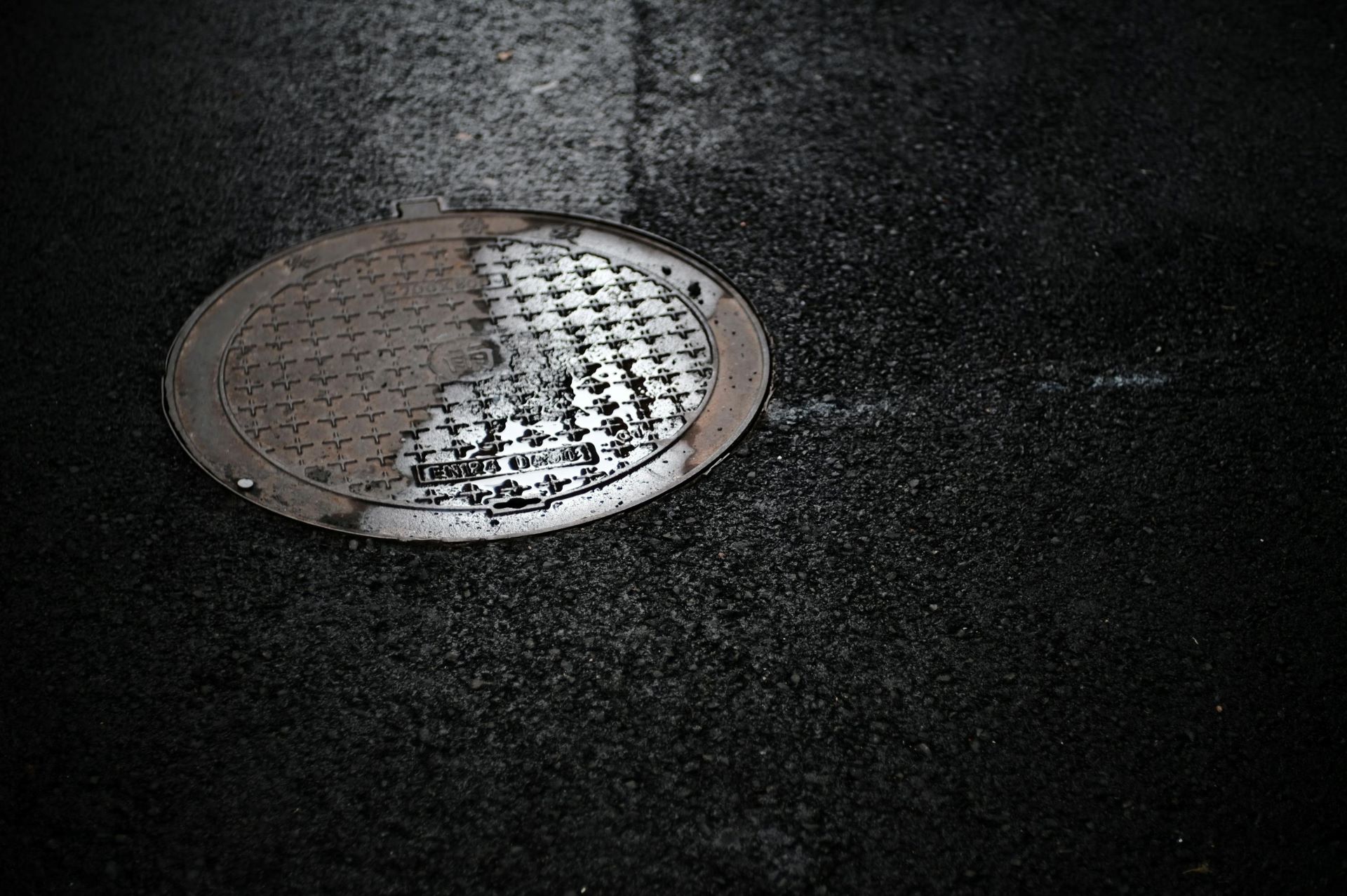
- Manholes surcharging during moderate storms
Over time, these symptoms escalate into property damage, road degradation, and increased maintenance costs.
In severe cases, repeated flooding can undermine road bases, damage foundations, and compromise municipal infrastructure.
The Maintenance Gap: The Silent Amplifier
Even well-designed systems degrade without maintenance. Sediment build-up, vegetation intrusion, and structural wear all reduce system efficiency.
In many suburbs, maintenance cycles do not match the speed at which systems degrade under modern storm conditions. This creates a widening performance gap between theoretical design and real-world operation.
The issue is not always engineering failure at the outset, but rather gradual functional decline over time.
Rethinking Suburban Stormwater Design
Modern stormwater design in South Africa is gradually shifting toward more integrated approaches. Instead of relying solely on underground conveyance, newer strategies increasingly incorporate:
- Controlled surface flow corridors
- Attenuation systems that temporarily store runoff
- Green infrastructure to slow and absorb water
- Distributed drainage rather than centralised discharge
These approaches aim to reduce peak loads and improve resilience under variable rainfall conditions.
The direction of travel is clear: stormwater systems must be designed not just to move water away, but to manage it intelligently within the urban landscape.
Towards Resilient Suburbs
The future of suburban drainage design lies in adaptability. Infrastructure must be capable of handling both current rainfall realities and plausible future extremes.
This requires a shift in mindset from static design to dynamic resilience. Systems should be able to accommodate variability, not just average conditions.
In South African suburbs, where rapid development meets climatic uncertainty, this shift is not optional. It is becoming a structural necessity.
Designing for the Rain That Has Not Yet Arrived
Stormwater systems are often invisible until they fail. Yet beneath every flooded street or overflowing drain lies a design decision made years earlier, based on assumptions that may no longer hold.
As rainfall intensifies and suburbs continue to grow, the challenge is no longer just about building bigger pipes. It is about understanding water as a dynamic force moving through increasingly complex urban environments.
The suburbs of the future will not be judged by how well they shed water, but by how intelligently they accommodate it.