Structural Steel vs Reinforced Concrete: Use Cases and Key Differences
In South Africa’s construction landscape, few decisions carry as much long-term weight as the choice between structural steel and reinforced concrete. It is a choice that quietly shapes everything from project budgets and build speed to structural lifespan and maintenance demands. While both materials have stood the test of time across residential suburbs, high-rise developments, industrial parks, and commercial precincts, they behave very differently once placed into service.
The reality on the ground is simple enough to state, yet complex in practice: material choice directly affects both cost and lifespan. And in a market like South Africa, where labour availability, material pricing fluctuations, and project timelines are always in motion, that decision becomes even more consequential.
Understanding the Two Structural Systems
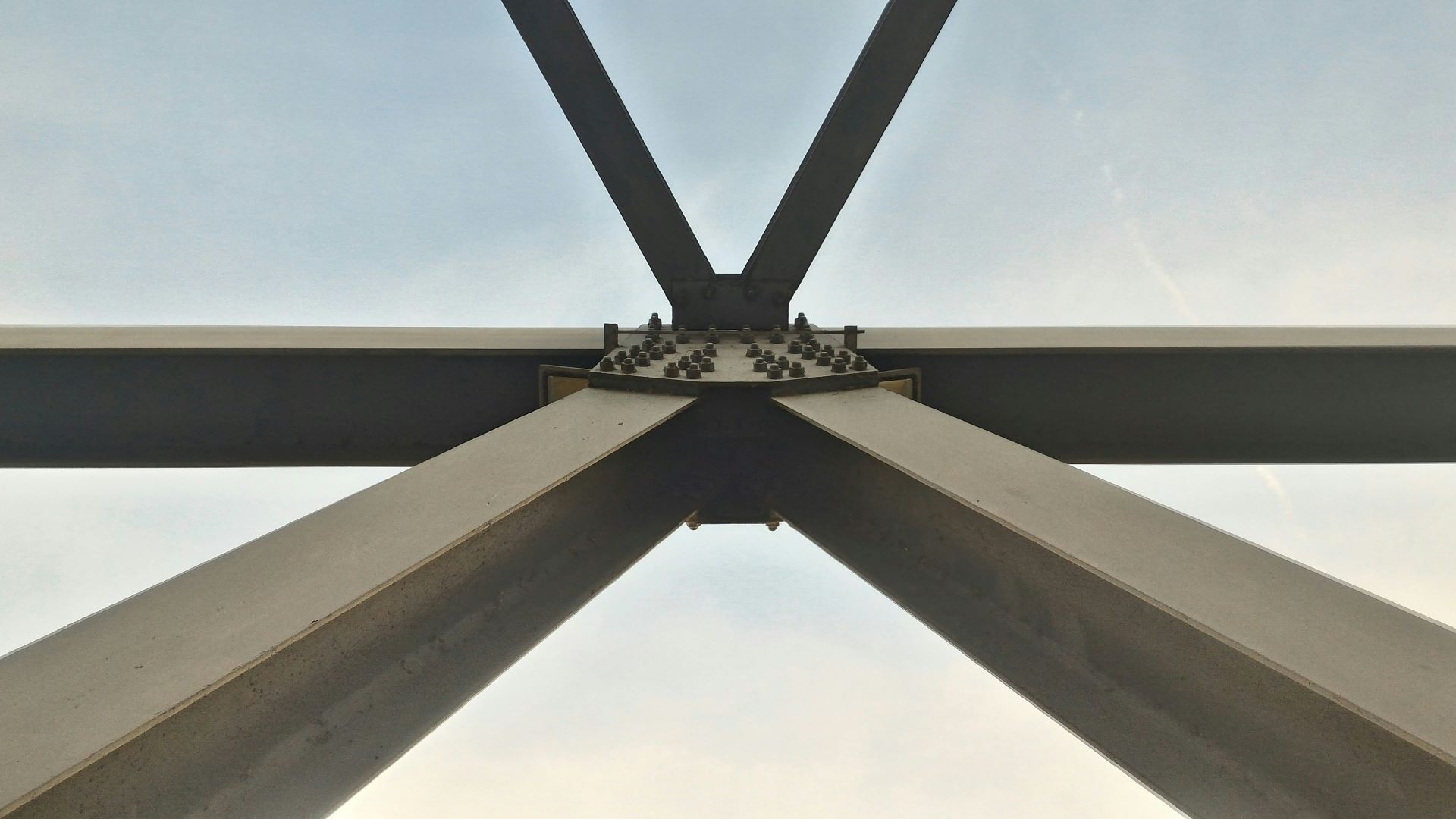
Structural steel is a prefabricated system built from fabricated steel sections—beams, columns, trusses—assembled on site like a high-strength skeleton. It is engineered for precision, strength-to-weight efficiency, and rapid erection. Its behaviour is predictable, its tolerances are tight, and its strength is exceptional under both tension and dynamic loading.
Reinforced concrete, by contrast, is a composite system formed on site. Concrete provides compressive strength while embedded steel reinforcement bars carry tensile forces. Once cured, it becomes a monolithic structure—solid, heavy, and highly resistant to environmental wear.
In South African practice, reinforced concrete is deeply embedded in mainstream building culture, particularly for residential housing, foundations, and mid-rise developments. Structural steel, meanwhile, is dominant in industrial facilities, warehousing, and fast-track commercial builds where speed and span efficiency matter.
Cost Reality in South African Construction
Cost is often the first point of comparison, and in South Africa it is rarely a simple one.
Reinforced concrete typically carries a lower initial material cost. Cement, aggregate, and reinforcing steel are locally available and widely used, which makes pricing relatively predictable in standard residential builds. However, the real cost unfolds over time in labour intensity, formwork requirements, and curing delays that extend site occupancy and overheads.
Structural steel generally arrives with a higher upfront material price tag. Fabrication, transport, and specialised installation all contribute to early-stage costs. Yet this is offset by significantly faster erection times and reduced on-site labour duration. In commercial projects, this speed advantage can translate into meaningful financial savings, particularly where rental income or operational deadlines are involved.
South African commercial construction benchmarks often place total build costs within a wide range depending on specification and use, but steel-heavy systems tend to compress timelines while concrete-heavy systems extend them. In practice, time becomes a financial variable as important as material price.
The most important insight here is that steel is often more expensive to start but cheaper to finish, while concrete is cheaper to start but can become more expensive across the full project lifecycle.
Structural Performance and Load Behaviour
The way each material carries load defines its most appropriate application.
Structural steel excels in tension and bending. It is ductile, meaning it can flex under stress without sudden failure. This makes it especially valuable in long-span structures, multi-storey commercial buildings, and areas where dynamic loads or seismic considerations exist.
Reinforced concrete performs exceptionally well under compression. It is inherently rigid and stable, making it ideal for foundations, load-bearing walls, slabs, and structural cores. Once cured, it behaves as a unified mass, distributing loads effectively across large surfaces.
In South African residential construction, this is why concrete dominates foundation systems and slab construction, while steel remains less common in low-rise homes unless architectural design demands open spans or lightweight roofing systems.
For commercial developments such as shopping centres, warehouses, and office blocks, both systems are often combined. Concrete provides stability and fire resistance in cores and floors, while steel frames deliver span efficiency and open-plan flexibility.
Construction Speed and Project Delivery
Time is one of the most underestimated cost drivers in construction.
Structural steel systems are typically fabricated off-site, meaning components arrive ready for rapid assembly. This reduces dependency on weather conditions and eliminates long curing periods. On large commercial projects in South Africa, this can significantly shorten delivery timelines and reduce exposure to inflationary cost increases during construction.
Reinforced concrete, by contrast, is a sequential process. Formwork must be erected, reinforcement installed, concrete poured, and curing allowed before load-bearing continues. Each stage depends on the completion of the previous one, which naturally extends project duration.
In residential developments, this difference may be less dramatic, but in commercial and industrial builds, the time advantage of steel becomes a strategic advantage. Faster completion often means earlier occupancy, earlier revenue generation, and reduced financing costs.
Durability and Environmental Exposure in SA Conditions
South Africa presents a diverse range of environmental conditions—from coastal humidity in Durban to dry inland climates in Gauteng and corrosive salt exposure along the Western Cape coastline.
Reinforced concrete is generally well-suited to these conditions. It offers excellent resistance to weathering and fire, and its mass helps regulate thermal performance. However, its durability depends heavily on workmanship quality. Poor curing, insufficient cover to reinforcement, or cracking can allow moisture ingress, leading to corrosion of internal steel and long-term structural degradation.
Structural steel, while extremely strong, is more sensitive to corrosion if left unprotected. In coastal environments, protective coatings, galvanisation, and regular maintenance become essential. Without these measures, deterioration can accelerate significantly.
In well-maintained commercial systems, steel can last decades with minimal structural degradation. Similarly, high-quality reinforced concrete structures can exceed a century of service life when properly designed and executed. The difference lies less in inherent lifespan and more in maintenance discipline.
Maintenance Demands and Lifecycle Costs
Lifecycle cost is where many construction decisions are either validated or regretted.
Structural steel requires periodic inspection, particularly for corrosion, coating failure, or connection fatigue. Maintenance tends to be planned and targeted, often involving repainting or protective recoating at intervals.
Reinforced concrete requires less frequent routine maintenance, but when issues arise, they are often more complex to resolve. Cracking, spalling, or reinforcement corrosion can require invasive repair methods that are both disruptive and costly.
In South African commercial property management, this distinction is critical. Steel systems offer easier inspection and modular repair, while concrete systems offer quieter long-term operation with fewer interventions but potentially higher repair complexity when failure occurs.
Fire Resistance and Safety Considerations
Fire performance is a decisive factor in building regulation compliance and insurance risk assessment.
Reinforced concrete performs strongly in fire conditions due to its non-combustible nature and slow heat transfer. It maintains structural integrity for extended periods under high temperatures, making it a preferred choice for stair cores, escape routes, and load-bearing walls.
Structural steel, while extremely strong under normal conditions, loses strength rapidly when exposed to high heat. As a result, it requires fireproofing systems such as intumescent coatings, cladding, or concrete encasement to meet safety standards.
In South African commercial buildings, hybrid systems are often used specifically to balance these fire safety requirements with design efficiency.
Residential Construction Use Cases
In residential construction across South Africa, reinforced concrete remains the dominant structural system. Foundations, slabs, and load-bearing elements rely on its compressive strength and cost efficiency.
Steel is typically used selectively in residential builds for roof trusses, carports, or architectural features requiring open spans and reduced weight. In luxury or modern architectural homes, steel framing is increasingly used to create open-plan interiors and large glass façades.
However, for most standard housing developments, concrete remains the most practical and cost-effective solution due to its availability, familiarity among contractors, and long-established building practices.
Commercial Construction Use Cases
Commercial construction tells a different story.
Structural steel dominates warehouses, logistics hubs, retail centres, and industrial facilities due to its speed of erection and ability to create large column-free spaces. This flexibility allows for adaptable interiors, which is essential in commercial leasing environments.
Reinforced concrete is commonly used in multi-storey office buildings, parking structures, and building cores where rigidity, fire resistance, and vibration control are essential.
In many South African commercial projects, hybrid systems represent the optimal solution. Concrete cores provide stability and safety, while steel frames deliver flexibility and speed.
Industrial and Infrastructure Applications
Industrial construction in South Africa heavily favours structural steel due to its scalability and efficiency. Manufacturing plants, mining infrastructure, and agricultural storage facilities benefit from steel’s ability to span wide areas with minimal internal supports.
Reinforced concrete remains essential in heavy-load infrastructure such as bridges, dams, and foundations where mass and compressive strength are critical.
This division reflects a broader global pattern: steel for flexibility and speed, concrete for mass and endurance.
Sustainability and Material Efficiency
Sustainability has become increasingly important in South African construction planning.
Structural steel is highly recyclable and can be reused with minimal loss of performance. Its off-site fabrication also reduces material waste during construction.
Reinforced concrete, while durable, has a higher environmental footprint due to cement production emissions. However, its long service life offsets some of this impact over time, particularly in long-term infrastructure.
The most sustainable solution in modern practice is often not one material over the other, but rather an intelligent combination that balances efficiency, durability, and lifecycle performance.
Final Considerations: Choosing the Right System
The decision between structural steel and reinforced concrete in South African construction is not a matter of superiority, but suitability.
Steel favours speed, flexibility, and long-span commercial applications where time and adaptability drive value. Concrete favours stability, cost control at entry level, and long-term durability in residential and heavy-load environments.
In practice, the most successful projects often blend both systems to extract the strengths of each. When chosen correctly, the material does not just support the building—it shapes its entire financial and structural future.
In a market as dynamic as South Africa’s, that choice becomes less about tradition and more about strategy.