
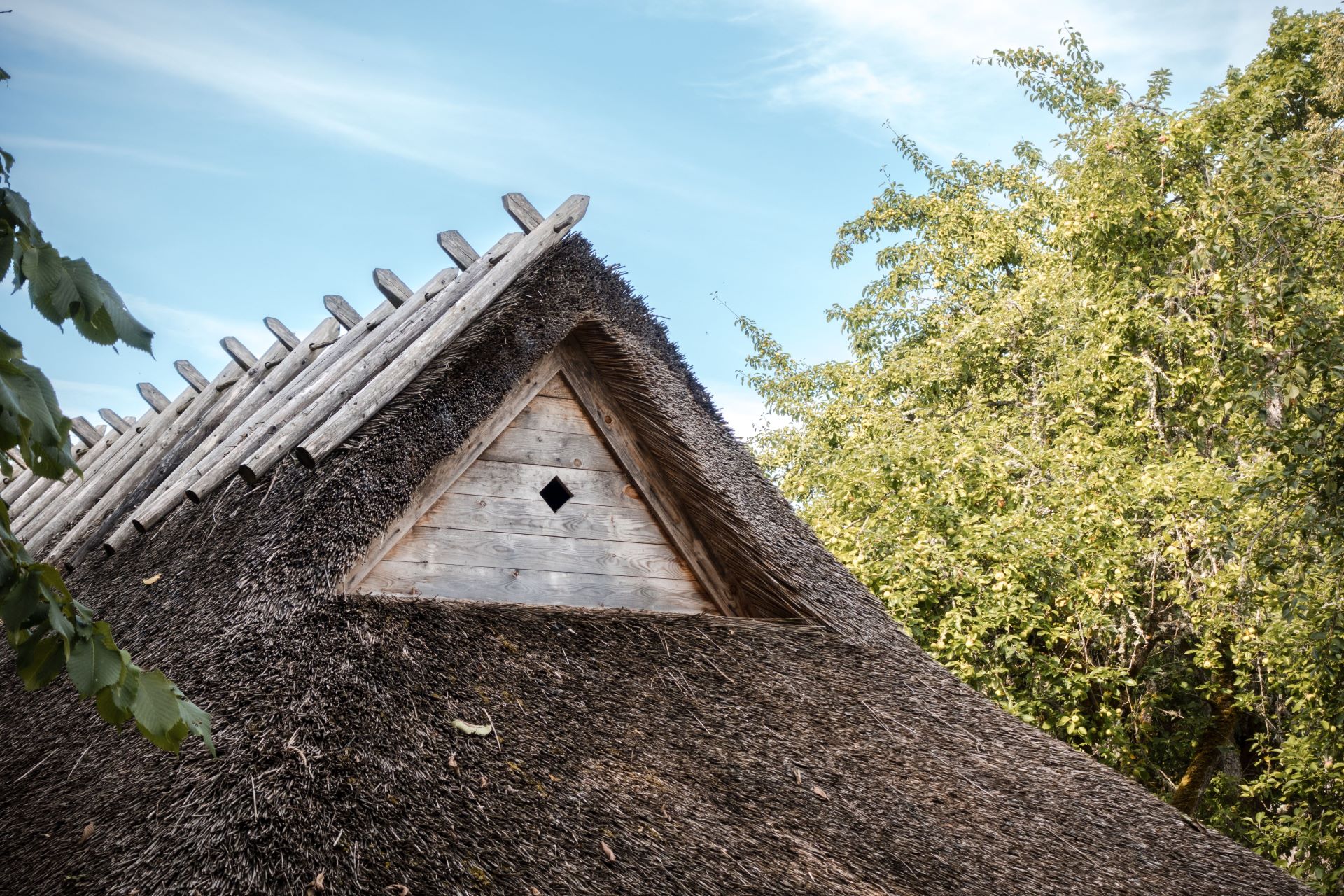
Thatched Roof Maintenance Basics in South Africa
The Living Roof Above Your Head
A thatched roof is not just a structural choice in South Africa; it is a living system. Unlike concrete tiles or metal sheets that age in predictable ways, thatch behaves like an organic skin stretched over timber bones. It breathes, it absorbs, it sheds, and it slowly transforms under sun, wind, rain, and time.
In many South African homes, especially lodges, game farms, rural estates, and lifestyle properties, thatch remains a beloved roofing method for its insulation and natural aesthetic. But with its beauty comes a responsibility: maintenance is not optional, it is continuous stewardship.
Understanding how thatch degrades differently is the key to protecting it. Fire risk, pest activity, and weathering are not separate issues. They are interwoven forces that shape the lifespan of the roof.
How Thatched Roofs Age Differently from Conventional Roofing
Most roofing systems fail in obvious, mechanical ways: a cracked tile, a rusted sheet, a broken seal. Thatched roofs, however, degrade biologically and climatically.
The top layer gradually decomposes due to UV exposure, rainfall cycles, and microbial activity. Beneath that surface, the tightly packed inner layers remain relatively protected for years. This layered behaviour is what allows well-maintained thatch to last decades, sometimes 25 to 40 years or more depending on material and upkeep.
However, this also means damage is often hidden until it becomes significant. A roof may appear visually intact while internal decay has already begun, especially in poorly ventilated or shaded sections.
The key principle in thatch maintenance is simple: protect the surface, preserve the structure, and control the environment around it.
Fire Risk: The Most Critical Maintenance Factor
In South Africa, fire is the most serious risk associated with thatched roofs. Hot summers, dry veld conditions, and rural exposure all contribute to a heightened ignition environment.
Thatched roofs are combustible by nature, but ignition is rarely spontaneous. It is typically the result of external factors such as stray embers from braais, chimney sparks, nearby vegetation fires, or electrical faults.
Once ignition occurs, the dense fibrous structure of thatch allows fire to travel quickly through the upper layers if it has dried excessively or become loose.
Fire prevention in thatch maintenance is therefore not a single action but a layered defence strategy.
The most important control measures include maintaining proper thatch density, ensuring ridge integrity, and keeping surrounding vegetation trimmed. Dry overhanging branches act like fire bridges, transferring heat directly onto vulnerable sections of the roof.
Chimney design also plays a critical role. Poorly fitted flashing or low chimney heights increase ember exposure, especially in windy conditions common across many South African regions.
Fire retardant treatments exist, but they are not a replacement for maintenance. They are a supplementary layer, not a guarantee.
Ultimately, a well-maintained thatch roof is not fireproof, but it is fire-aware.
Pest Activity: The Hidden Degraders
Pests are one of the most underestimated threats to thatched roofs. Unlike visible storm damage, pest intrusion is slow, silent, and often overlooked until structural weakening occurs.
Birds are among the most active disruptors. Certain species will pull strands of thatch for nesting material, loosening compacted sections over time. Once the surface opens up, it becomes easier for moisture to enter, accelerating decay.
Rodents also present a serious challenge. They are drawn to warm roof spaces and can create nesting pockets within the thatch layers or supporting structures. Their movement disrupts compaction and introduces contamination that attracts further infestation.
In some parts of South Africa, primates such as monkeys can cause significant damage by physically tearing at exposed sections of roofing.
Insect activity, especially borers and termites in underlying timber structures, should not be ignored either. While thatch itself is not wood, the supporting frame is vulnerable. If the structural base weakens, the roof’s integrity is compromised even if the thatch layer appears intact.
Pest control in thatch systems relies heavily on prevention. This includes sealing entry points into roof cavities, maintaining clean roof perimeters, and avoiding food sources near structures. Overgrown trees close to the roof act as both access routes and shelter corridors.
A clean perimeter is not cosmetic. It is structural protection.
Weathering: The Slow Transformation of Material
Weather is the primary force that shapes the lifecycle of a thatched roof. In South Africa, this includes intense UV exposure, seasonal thunderstorms, strong winds, and in some regions, prolonged humidity.
Each element contributes differently to degradation.
Sunlight dries and weakens the outer fibres, making them brittle over time. Rainfall, especially when combined with wind, can force moisture into uneven or poorly compacted areas. If drainage is not efficient, water tends to linger in valleys and low-slope sections, increasing rot risk.
Wind plays a dual role. It can remove loose material, which is a form of natural thinning, but it can also lift poorly secured sections, exposing underlying layers.
The geometry of the roof is crucial here. Thatch performs best at steep pitches, typically above 45 degrees, allowing water to shed quickly rather than soak into the structure. When pitch is too shallow or valleys are poorly designed, weathering accelerates dramatically.
South African climates vary widely, from coastal humidity in KwaZulu-Natal to dry inland heat in Gauteng and the North West. Each environment produces a different weathering pattern, meaning maintenance strategies must be locally adapted rather than generic.
The Importance of Ventilation in Roof Longevity
Ventilation is often overlooked in thatched roof systems, yet it is one of the most important factors in preventing decay.
A thatched roof must breathe. Moisture naturally accumulates within organic materials, and without airflow, that moisture becomes trapped. This creates the ideal environment for rot, mould, and insect activity.
Proper ventilation allows heat and humidity to escape through the roof structure. This is particularly important in enclosed roof spaces where warm air rises and condenses against cooler thatch layers.
In South African conditions, where temperature swings between day and night can be significant, condensation cycles are frequent. Without ventilation, these cycles gradually break down internal fibres even when the surface appears unaffected.
Ventilation is achieved through careful design of ridge structures, airflow gaps in the roof space, and ensuring that surrounding vegetation does not block natural air movement.
It is a silent system, but one that determines long-term durability.
Maintenance Cycles: What Regular Care Actually Looks Like
Thatched roofs do not follow a single maintenance calendar. Instead, they operate on overlapping cycles of inspection, surface renewal, and structural intervention.
Light maintenance such as brushing or cleaning typically occurs every few years, depending on environmental exposure. This process removes degraded surface fibres and restores compactness, improving both drainage and appearance.
More intensive interventions, such as patching or re-ridging, occur less frequently but are essential for structural longevity. The ridge, being the most exposed section, often requires replacement before the rest of the roof shows significant wear.
Regular inspections are the backbone of maintenance. These are ideally done from ground level or upper windows, not by walking on the roof, which can damage the thatch structure.
After storms is a particularly important inspection window. Wind-driven rain and debris can shift thatch layers, especially around eaves and corners.
A disciplined maintenance rhythm is what separates a roof that lasts decades from one that deteriorates prematurely.
Common Weak Points in Thatched Roofs
Every thatched roof has structural vulnerabilities, often found in predictable locations.
Valleys are among the most critical. These are the intersections where multiple roof planes meet, creating concentrated water flow channels. If poorly designed or maintained, they become decay hotspots.
Eaves are another high-risk zone. This is where water runoff is most intense, and where animals often attempt entry points.
Chimney junctions and roof penetrations also require careful attention. Any break in the uniform thatch layer introduces a potential leak path.
Shaded areas, particularly those under trees or adjacent structures, tend to retain moisture longer than sun-exposed sections. This uneven drying leads to patchy degradation.
Understanding these weak points allows for targeted maintenance rather than reactive repairs.
Material Differences and Their Impact on Maintenance
Not all thatch behaves the same. In South Africa, common materials include water reed, combed wheat reed, and long straw variants.
Water reed tends to offer the longest lifespan due to its density and resistance to decay. Wheat reed performs moderately well in balanced climates, while lighter straw-based thatch requires more frequent maintenance due to its softer structure.
Material choice affects everything from brushing frequency to fire resistance and pest vulnerability.
Denser thatch generally resists wind and rain better but may require more careful ventilation management. Lighter thatch breathes easily but can degrade faster under UV and storm exposure.
Material selection is therefore not just an aesthetic decision but a long-term maintenance commitment.
Environmental Management Around the Roof
A thatched roof does not exist in isolation. Its environment plays a direct role in its performance.
Trees close to the roof provide shade, which can be beneficial in reducing UV exposure, but they also introduce risks. Overhanging branches drop debris, retain moisture, and provide access routes for pests.
Ground vegetation around the structure should be managed to reduce fire load. Dry grass and shrubs act as fuel sources in the event of external fire exposure.
Drainage around the building is equally important. Poor site drainage can increase humidity levels near the roof base, indirectly affecting upper layers.
Good environmental management reduces maintenance pressure on the roof itself.
When Maintenance Becomes Restoration
There is a point in every thatched roof’s life where maintenance alone is no longer sufficient. This is not failure, but natural lifecycle progression.
When internal layers become exposed, compaction is lost, or water penetration becomes widespread, more extensive intervention is required. This may include partial or full re-thatching.
At this stage, delaying action often increases cost and reduces structural lifespan.
Recognising the transition point between maintenance and restoration is one of the most important skills for property owners.
Conclusion: Stewardship Over Structure
A thatched roof in South Africa is not a static asset. It is a dynamic system shaped by fire, pests, and weather in equal measure.
Fire demands vigilance. Pests demand prevention. Weather demands adaptation.
When these forces are understood and managed together, a thatched roof becomes more than a roofing choice. It becomes a long-term architectural partnership with nature itself.
Proper maintenance is not about preventing change. It is about guiding it.