
The Hidden Danger of Small Roof Leaks in SA Homes
The Slow Violence of a “Minor” Roof Leak
A roof leak rarely announces itself with drama. It begins quietly, almost politely, as a faint stain on a ceiling board or a single damp patch after a heavy summer storm. In South Africa, where rainfall patterns can shift from intense coastal downpours to sudden Highveld thunderstorms, these small breaches in the building envelope are often dismissed as temporary inconveniences.
That dismissal is where the trouble begins.
A roof leak is not a fixed point of failure. It is an entry point. Once water penetrates roofing materials, it stops behaving like a simple drip and starts behaving like a traveller with purpose. It follows gravity, capillary action, and structural pathways that most property owners never see. By the time it becomes visible damage, it has usually already mapped a complex route through insulation, timber, concrete, and finishes.
The danger lies not in the leak itself, but in its patience.
South African Conditions That Accelerate Roof Vulnerability
Across South Africa, roofs face a combination of environmental stressors that quietly amplify the impact of even the smallest defect.
In coastal regions, salt-laden moisture degrades fasteners and corrodes metal sheeting. In Gauteng and other inland provinces, hailstorms and thermal expansion place repeated strain on roof joints. In the Western Cape, winter rainfall persists long enough to keep materials saturated for extended periods.
These conditions create a cycle of expansion, contraction, wetting, and drying. Each cycle slightly loosens seals, widens micro-gaps, and reduces the effectiveness of waterproof membranes. A minor crack in flashing or a displaced tile may remain unnoticed for months, yet still allow intermittent water ingress.
What makes the South African context particularly challenging is the intensity of rainfall events. Water does not merely soak; it drives. Wind-assisted rain can push moisture under tiles, into ridge caps, and through microscopic openings that would otherwise remain dry in gentler climates.
How Water Actually Moves Inside a Building
To understand the real risk of a small roof leak, one must abandon the idea of water as a simple downward force. Inside a structure, water behaves more like a networked system, responding to pressure differentials, material absorption rates, and internal pathways.
Once inside a roof assembly, water rarely takes a straight line. It spreads laterally along rafters, soaks into insulation, and travels across vapour barriers. In some cases, it clings to the underside of roofing sheets before dropping at unpredictable points far from the original entry.
This is known as water migration, and it is the reason a stain on a ceiling is often metres away from the actual roof defect.
Timber elements can act like capillary channels, drawing moisture along grain lines. Concrete slabs, though dense, contain micro-pores that allow slow absorption and lateral spread. Even electrical conduits and service voids can become unintended highways for moisture movement.
By the time water becomes visible inside a room, it has already explored a hidden internal geography of the building.
The First Stage: Invisible Saturation
The earliest phase of a roof leak is almost always invisible. Water enters in small quantities and is absorbed into surrounding materials without immediate surface symptoms.
Ceiling insulation becomes damp first. Because insulation is designed to trap air, it also traps moisture. This reduces its thermal performance long before any visible sign appears. Homeowners may notice increased indoor temperature fluctuations or rising energy usage without connecting it to a roof issue.
Timber trusses begin to absorb moisture next. Wood is particularly sensitive to repeated wetting cycles. Even small amounts of water exposure can cause swelling, weakening of joints, and gradual loss of structural rigidity.
At this stage, the building still appears intact. Yet internally, its performance is already compromised.
The Second Stage: Material Breakdown Begins
As water exposure continues, materials begin to degrade more visibly at a microscopic level. Paint systems lose adhesion due to moisture behind the surface. Plaster begins to soften. Gypsum boards, commonly used in South African ceilings, absorb water and lose structural cohesion quickly.
This is often when ceiling stains appear, typically as yellow-brown patches. These stains are not simply cosmetic issues. They are indicators that water has already passed through multiple layers of the building envelope.
Metal components may also begin to corrode. In roof assemblies using fasteners, brackets, or flashing, corrosion spreads outward from the point of moisture exposure. Once corrosion begins, it accelerates rapidly, especially in coastal environments.
At this point, repair costs begin to rise significantly, even though the initial leak may still seem “small.”
The Third Stage: Structural Pathway Formation
Once water has established repeated pathways through a structure, it begins to carve out preferred routes. This is where the concept of water migration becomes critical.
Water does not distribute evenly. It concentrates along paths of least resistance. Over time, these paths become semi-permanent channels within the building’s internal structure.
In timber roofs, repeated wetting can lead to the formation of moisture trails along beams and joints. In masonry structures, water may exploit cracks in mortar lines, gradually widening them through repeated expansion and contraction cycles.
This stage is particularly dangerous because the building begins to “guide” water deeper into itself. What began as a minor roof defect now influences how moisture behaves during every rainfall event.
The Hidden Role of Roof Design in Leak Spread
Roof design plays a significant role in how water migrates once it enters a structure. Complex roof geometries with multiple valleys, dormers, and intersecting planes create natural collection points for water.
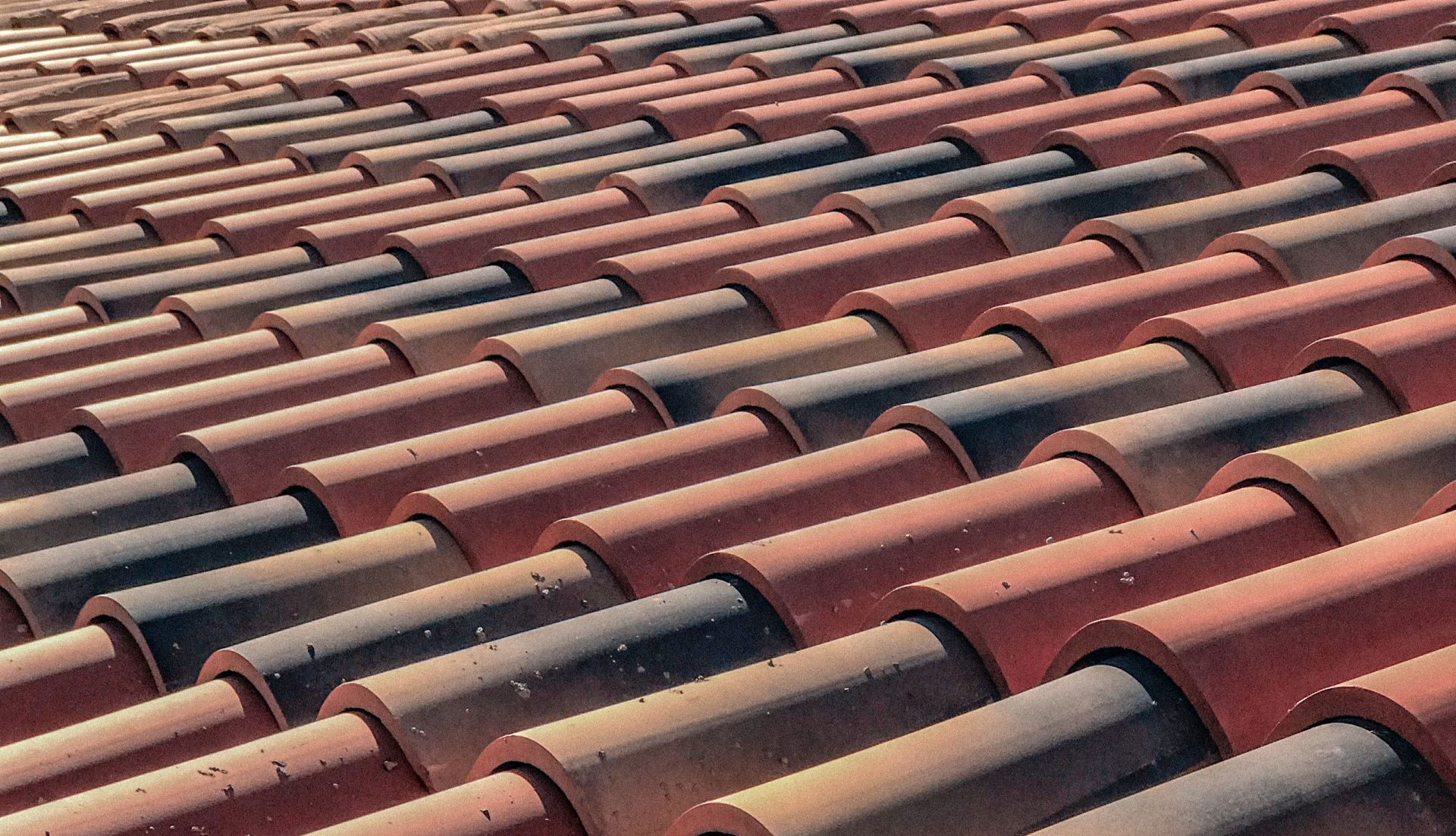
In South African residential architecture, tiled roofs are common, and while durable, they rely heavily on correct overlap and underlay integrity. If underlay membranes are compromised, water can travel significant distances beneath tiles before emerging indoors.
Flat roofs present a different challenge. Even slight ponding can increase hydrostatic pressure, forcing water through small imperfections in waterproofing layers. Once penetration occurs, water spreads horizontally within the slab or screed layer before finding an exit point.
The more complex the roof structure, the more unpredictable the internal water pathways become.
The Misleading Nature of Interior Symptoms
One of the most common mistakes in building maintenance is treating the visible symptom as the problem itself.
A damp ceiling corner is often patched and repainted without investigating the source. A small drip is managed with a temporary tray or sealant. These responses address the symptom but leave the migration system intact.
Water, however, does not respect surface-level repairs. If the entry point remains unresolved, it will simply reroute itself through another pathway.
This is why many buildings experience recurring leaks in different locations. The underlying breach has never been properly identified or repaired.
Seasonal Pressure and the Build-Up Effect
South Africa’s seasonal weather patterns contribute significantly to leak progression.
During dry seasons, materials contract and small gaps may widen. During wet seasons, those same gaps become active entry points. Over time, this cycle creates cumulative stress on roofing systems.
Heavy summer storms in regions like Gauteng can deliver intense rainfall in short bursts. These events overwhelm drainage systems and expose weaknesses that may have gone unnoticed during lighter rains.
In coastal regions, prolonged humidity ensures that once water enters a structure, it dries slowly, extending the period of material exposure and increasing the likelihood of long-term damage.
The Role of Maintenance Culture in Preventing Escalation
Roof maintenance is often deprioritised because the roof is not constantly visible. Unlike plumbing or electrical systems, it does not demand daily attention. This creates a false sense of security.
In many South African properties, roof inspections only occur after visible damage appears. By then, the migration process is already well advanced.
Preventative maintenance, however, is significantly more cost-effective. Regular inspection of flashing, tiles, gutters, and waterproof membranes can identify early-stage vulnerabilities before water infiltration begins.
Even small interventions, such as replacing a displaced tile or resealing a joint, can interrupt the migration pathway before it develops into a systemic issue.
The Escalation from Repair to Reconstruction
Once water migration has progressed through multiple layers of a structure, repairs become more invasive.
What begins as a simple roofing fix can evolve into ceiling replacement, insulation renewal, timber repair, and in severe cases, partial structural reconstruction. Electrical systems may also require inspection if moisture has reached wiring channels.
The financial difference between early intervention and delayed repair is substantial. More importantly, delayed intervention increases the risk of long-term structural instability that cannot be reversed without significant rebuilding work.
Why Small Leaks Are Never Truly Small
The concept of a “small leak” is misleading because it describes the size of the visible symptom rather than the scope of the underlying process.
Water is persistent, adaptive, and highly efficient at finding pathways through complex structures. Once inside a building, it does not remain static. It spreads, accumulates, and reshapes the internal moisture balance of the structure.
In South African conditions, where buildings are regularly exposed to intense weather variability, even minor breaches in roofing systems should be treated as high-priority concerns.
A roof is not merely a covering. It is a managed barrier system. When that system is compromised, even slightly, the entire building becomes vulnerable to slow, progressive internal change.
Reading the Early Warning Signs
The earliest signs of roof leakage are often subtle, but they are never insignificant. A faint stain, a soft patch in a ceiling, or a slight musty smell after rain should all be treated as indicators of internal moisture movement.
Understanding how water migrates through a structure changes the way one responds to these signals. Instead of seeing isolated defects, one begins to see a system in motion.
And once that system is understood, the importance of early intervention becomes unmistakably clear.
In building maintenance across South Africa, vigilance is not an optional extra. It is the difference between a manageable repair and a cascading structural problem that unfolds quietly, one drop at a time.