
The Lifecycle of South African Buildings Explained
The Lifecycle of a South African Building Explained
A building is never truly finished. In South Africa’s demanding climate of intense UV exposure, seasonal rainfall shifts, coastal corrosion, and inland thermal stress, every structure begins a slow and predictable journey the moment the last brick is laid. It is a journey not of decline alone, but of cycles—construction, use, deterioration, intervention, and renewal.
Understanding this lifecycle is not merely academic. It is the difference between a structure that quietly endures for decades and one that prematurely consumes capital in endless repairs. In practice, buildings behave less like static objects and more like living systems, responding continuously to environment, material quality, and human care.
This article unpacks that journey in a South African context, from the first concrete pour to long-term rehabilitation strategies that extend usable life far beyond initial expectations.
The Concept of Building Lifecycles in South Africa
Every building follows a lifecycle pattern that can be broadly divided into phases: design, construction, occupancy, maintenance, deterioration, and eventual renewal or repurposing. While these stages appear linear, in reality they overlap and cycle repeatedly as systems age at different rates.
In South Africa, lifecycle behaviour is strongly influenced by regional climate variation. Coastal cities like Durban accelerate corrosion in steel reinforcements and external fixtures, while inland areas such as Johannesburg impose strong thermal expansion cycles that stress roofing systems and façade materials.
This means that two identical buildings, built from the same drawings, may age at completely different speeds depending on their environment and maintenance discipline.
A well-managed building lifecycle therefore becomes a strategic asset management process rather than a passive outcome of time.
Design and Pre-Construction Foundations
The lifecycle begins long before ground is broken. During the design phase, critical decisions are made that will determine decades of performance outcomes.
Material selection is especially important in South Africa, where cost pressures often compete with durability requirements. Choices around roofing systems, waterproofing membranes, concrete grade, and protective coatings directly influence long-term deterioration rates.
Site conditions also shape lifecycle resilience. Soil composition in many parts of Gauteng, for example, can lead to differential settlement if not properly addressed in foundation design. In coastal zones, proximity to salt-laden air necessitates corrosion-resistant detailing that is often underestimated during budgeting.
At this stage, lifecycle thinking should already be active. A building designed without consideration for long-term maintenance is effectively a building designed for early failure, regardless of how impressive it appears at handover.
Construction and Material Realisation
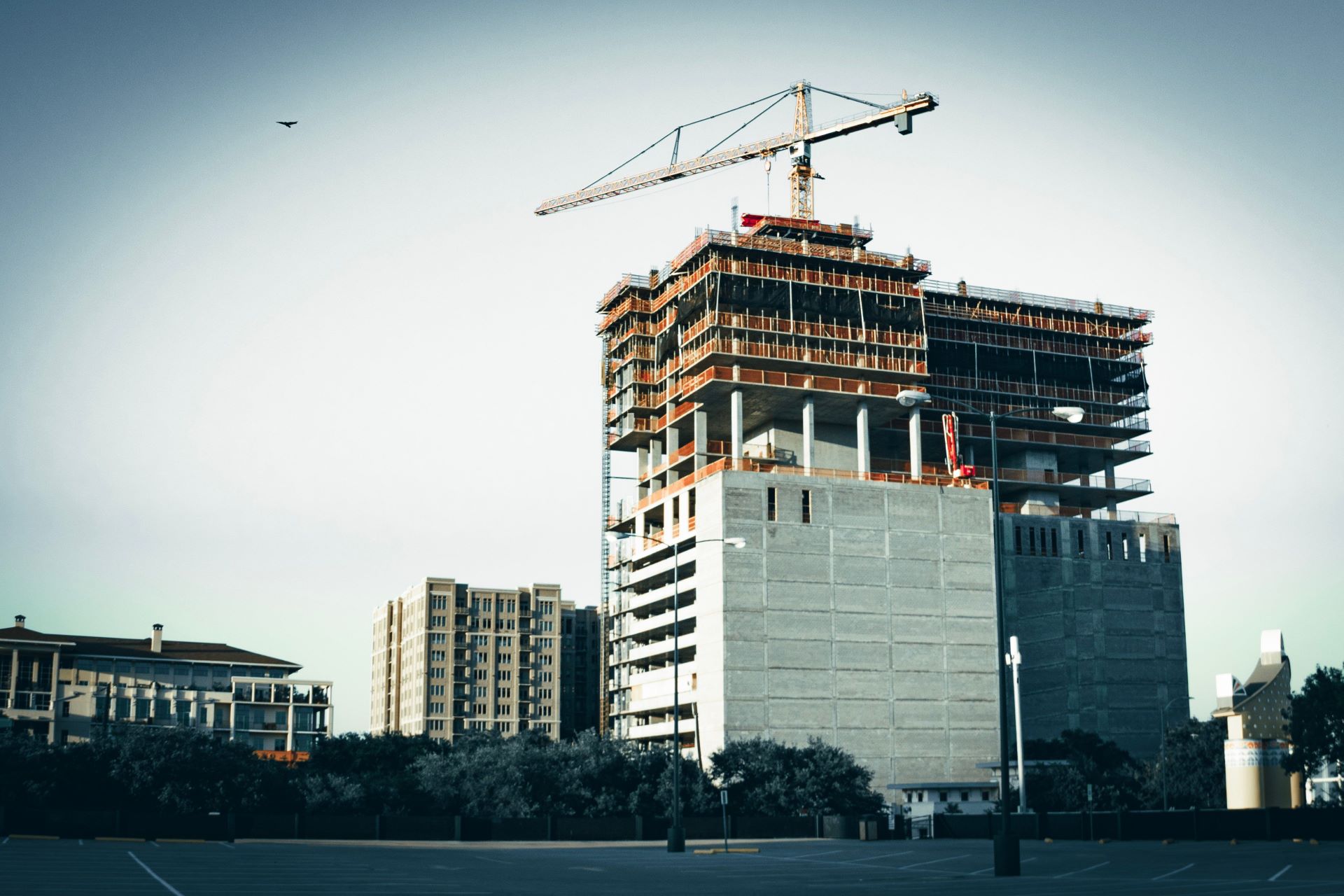
Construction is the moment where design intent becomes physical reality. Yet it is also one of the most sensitive stages in the lifecycle, because workmanship quality determines how quickly deterioration will begin.
In South Africa’s construction environment, variability in labour skill, site supervision, and material supply chains can introduce early weaknesses into structures. Poor concrete curing, inadequate waterproofing application, or rushed finishing work often do not reveal themselves immediately, but they manifest later as leaks, cracks, and surface degradation.
This phase sets the “baseline health” of the building. A well-constructed structure enters its lifecycle with resilience. A poorly executed one enters already compromised, beginning its deterioration curve earlier than expected.
Once completed, the building transitions into occupation, where performance is continuously tested under real conditions.
Early Occupancy and Stabilisation
The first years of occupancy often appear deceptively stable. Systems are new, finishes are fresh, and major failures are rare. However, this is also when latent defects begin to surface.
In South African conditions, early issues commonly include waterproofing failures after heavy rainfall seasons, minor cracking from thermal movement, and HVAC inefficiencies due to improper commissioning.
This phase is critical for establishing maintenance routines. Buildings that receive structured preventative maintenance during early occupancy tend to resist accelerated ageing. Those that do not often enter premature deterioration cycles.
It is also during this stage that the true operational behaviour of the building becomes visible. Energy consumption patterns, water usage inefficiencies, and load stresses reveal whether the design assumptions were accurate.
Active Service Life and Maintenance Cycles
Once a building settles into its long-term operational phase, maintenance becomes the central force shaping its lifespan.
This is the longest and most economically significant phase of the lifecycle. Studies across built environments consistently show that operational and maintenance costs outweigh initial construction costs over time, sometimes by a factor of several multiples.
In South Africa, this phase is particularly influenced by climate exposure. UV radiation in high-altitude regions like Johannesburg accelerates roof membrane degradation. Heavy seasonal rainfall places pressure on drainage systems and external waterproofing. Coastal humidity drives corrosion in steel and fasteners.
Maintenance during this phase is not optional. It is the mechanism that slows natural deterioration. Routine inspections of roofs, façades, plumbing systems, electrical infrastructure, and structural components allow early intervention before minor defects evolve into structural issues.
Well-managed buildings develop predictable maintenance rhythms. Paint cycles, sealant replacements, roof resealing, and mechanical servicing become part of a structured calendar rather than reactive emergencies.
Without this discipline, deterioration begins to outpace intervention.
Deterioration and Material Fatigue
All buildings eventually enter a stage where visible deterioration becomes more frequent and more complex. This is not a failure of construction alone but a natural consequence of material fatigue under environmental stress.
Cracking in concrete, corrosion of reinforcement, roof membrane brittleness, and façade staining are common indicators of this stage. In South Africa, fluctuating temperatures and moisture exposure accelerate these processes, especially where maintenance has been inconsistent.
At this point, systems begin to interact in failure. A minor roof leak can lead to internal dampness, which then damages electrical systems, ceilings, and finishes. What begins as a small defect becomes a cascading chain of degradation.
This phase often marks the transition from routine maintenance to targeted rehabilitation planning.
Rehabilitation and System Renewal
Rehabilitation represents a decisive intervention in the building lifecycle. It involves restoring, upgrading, or replacing key building systems that have reached or exceeded their service life.
In South Africa, rehabilitation projects commonly include roof replacements, façade restoration, waterproofing overhauls, structural repairs, and mechanical system upgrades. These interventions are not cosmetic; they are structural resets that extend building life significantly.
This phase is also where modernisation often occurs. Older buildings may be upgraded to meet new energy efficiency standards, safety regulations, or functional requirements. In many cases, rehabilitation is more economical than demolition and reconstruction, particularly in urban centres where land value is high.
A well-executed rehabilitation can effectively restart parts of the lifecycle, pushing the building back into a stable maintenance phase.
Long-Term Adaptation and Repurposing
As buildings age further, they often undergo functional transformation. Offices become residential units, warehouses become retail spaces, and institutional buildings are adapted for new uses.
This adaptive phase is increasingly relevant in South African cities where urban density and land scarcity encourage reuse over replacement.
Adaptation extends lifecycle value by aligning existing structures with new economic realities. However, it requires careful structural assessment, compliance upgrades, and often significant internal reconfiguration.
At this stage, the building is no longer defined by its original design intent, but by its capacity to evolve.
End-of-Life and Decommissioning
Eventually, every building reaches a point where continued maintenance or rehabilitation is no longer economically or structurally viable.
This stage may involve partial demolition, full demolition, or material recycling for reuse in new construction. In some cases, only the structural frame remains, with the rest of the building being reimagined or rebuilt.
In South Africa, end-of-life decisions are often influenced by land value, redevelopment pressure, and structural condition. Urban centres frequently favour redevelopment due to high demand for space, while lower-density areas may continue extending building life through incremental repairs.
Even at this stage, lifecycle thinking remains important. Materials reclaimed from demolition can re-enter the construction economy, continuing the cycle in a different form.
The Continuous Cycle of Building Life
The most important truth about building lifecycles is that they are not linear stories with a final ending. They are repeating systems of use, stress, repair, and renewal.
In South Africa’s climate, where environmental conditions are particularly demanding, this cycle becomes more pronounced. Buildings that are actively managed do not simply last longer; they transform more intelligently over time.
A well-understood lifecycle approach allows property owners, developers, and maintenance teams to shift from reactive repairs to predictive stewardship. It turns buildings from liabilities that degrade into assets that adapt.
In the end, every structure tells the story of how it was maintained, not just how it was built.