
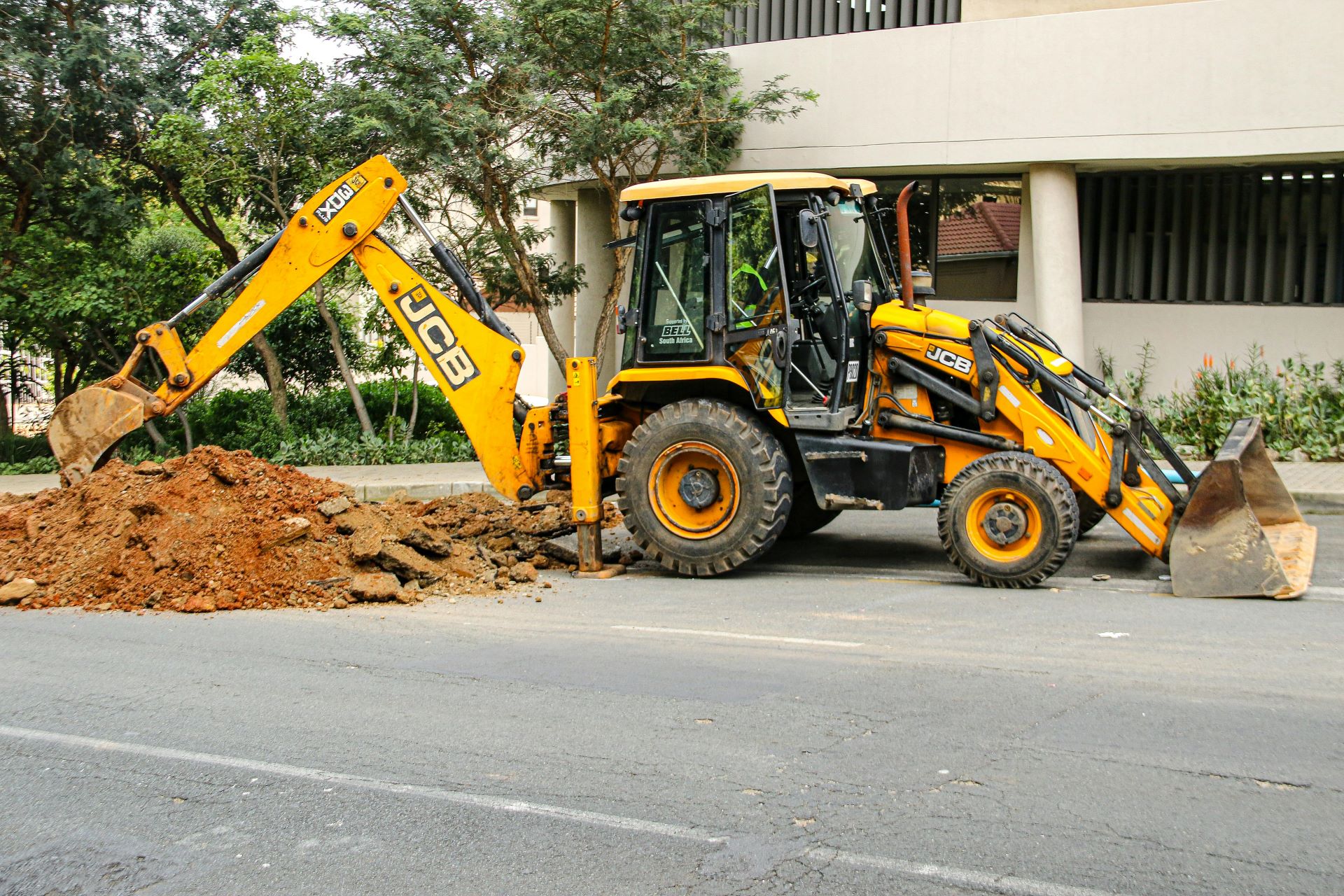
Why Parking Lot Potholes Form in South Africa and Fix Them
The Hidden Problem Beneath the Surface
A pothole in a parking lot rarely begins as a visible defect. It starts quietly, below the asphalt skin where most property managers never look. In South Africa, where heavy seasonal rains, intense summer heat, and variable construction quality all collide, that hidden layer becomes the real battlefield.
What appears as a small surface crack is often the final symptom of a much deeper structural failure. By the time a tyre drops into a pothole outside a shopping centre in Johannesburg or a residential complex in Cape Town, the damage has already been developing for months, sometimes years.
Parking lots and complex driveways behave like miniature road systems. They carry constant traffic loads, experience drainage pressure, and rely on layered engineering principles that are often misunderstood or under-maintained. The result is predictable: once the foundation weakens, the surface collapses.
Understanding potholes in these environments requires looking beyond the asphalt and into the structure beneath it.
The Layered Anatomy of a Parking Surface
Every properly built parking lot is a layered system, almost like a cake designed for punishment. Each layer has a specific role, and failure in one layer almost always leads to failure above it.
The top layer is the asphalt wearing course. This is what vehicles interact with directly. Beneath that sits the base course, typically crushed stone compacted to distribute loads. Below that is the sub-base, which stabilises and helps with drainage. At the very bottom lies the subgrade, the natural soil that supports everything above.
When these layers are correctly designed and installed, the system spreads loads evenly. A heavy delivery truck or constant daily traffic becomes manageable stress rather than destructive force.
However, in many South African complexes and commercial properties, one or more of these layers is compromised from the start. Sometimes compaction is insufficient. Sometimes cheaper materials are used. Sometimes drainage is ignored entirely. The result is a system that looks solid on day one but slowly deteriorates under real-world conditions.
Once the integrity of any layer is weakened, the stress begins to concentrate. That concentration is what eventually becomes a pothole.
How Water Becomes the Silent Destroyer
If there is one consistent culprit behind potholes in South African parking areas, it is water.
Rainfall in many parts of the country is intense and seasonal. When drainage systems are poorly designed or blocked, water does not escape the surface. Instead, it seeps downward through micro-cracks in the asphalt.
Once water enters the base or sub-base layers, it begins to destabilise them. Compacted stone loses its interlocking strength when saturated. Fine particles are washed away. Voids form beneath the surface.
During dry periods, the damage remains hidden. But when traffic continues to pass over weakened zones, the structure begins to flex. Eventually, the asphalt layer can no longer bridge the void underneath and collapses.
In complexes with poor stormwater planning, this cycle repeats every season. Water enters, weakens the structure, drains partially, then returns again with the next rainfall. Over time, the pavement behaves less like a solid surface and more like a hollow shell.
Even small design flaws, such as incorrect slope angles or poorly placed drain inlets, can dramatically accelerate this process.
The Role of Poor Compaction During Construction
One of the most underestimated causes of potholes is what happens before the surface is even finished: compaction.
During construction, each layer of the parking lot must be compacted to a specific density. This ensures that the material can properly distribute loads and resist deformation. If compaction is rushed or inconsistent, hidden weak zones remain in the structure.
These weak zones do not fail immediately. Instead, they slowly compress under traffic loads. As they compress, the surface above begins to deform. Small depressions appear, allowing water to collect. That water then accelerates the breakdown process.
In South Africa’s construction environment, where cost pressures and tight timelines often influence workmanship, compaction shortcuts are not uncommon. The problem is that the consequences do not appear until long after the contractor has left the site.
A parking lot can look perfect upon completion and still be structurally flawed beneath the surface. Months later, the first potholes appear, seemingly without warning, but in reality they were inevitable from the moment the roller left the site.
Traffic Loads: The Pressure That Never Stops
Parking lots are not static environments. Unlike residential driveways, they experience continuous and often unpredictable loading patterns.
In South African shopping centres, office parks, and residential complexes, surfaces must handle everything from compact passenger vehicles to delivery trucks, refuse collection vehicles, and maintenance fleets. Each of these imposes different stress patterns.
Heavy vehicles create concentrated pressure points that push through the asphalt and into the layers below. Repeated turning movements, especially in tight parking areas, introduce shear stress that weakens the surface over time.
Even stationary loads matter. Vehicles parked for long periods in the same spots can cause gradual deformation in weaker pavement structures, especially during hot weather when asphalt becomes more pliable.
The combination of constant load variation and high traffic frequency creates a fatigue cycle. The pavement flexes repeatedly until micro-cracks form. Once these cracks connect with water infiltration, the deterioration accelerates rapidly.
Thermal Expansion and South Africa’s Climate Extremes
South Africa’s climate plays a quiet but significant role in pothole formation. Asphalt is a temperature-sensitive material. It expands in heat and contracts in cold conditions.
In regions like Gauteng, where summer temperatures can be intense, asphalt surfaces soften during peak heat. This makes them more vulnerable to deformation under load. Wheel tracking, rutting, and surface displacement become more likely.
During cooler nights or seasonal shifts, the surface contracts again. This repeated expansion and contraction creates internal stress within the material. Over time, these stresses contribute to cracking.
Once cracks form, they become entry points for water. From there, the structural degradation process accelerates.
In coastal regions like Durban, humidity and heavy rainfall introduce a different challenge. Moisture penetration combined with warm temperatures creates ideal conditions for base layer weakening.
The climate does not directly create potholes, but it creates the conditions that allow structural weaknesses to surface quickly.
The Influence of Substandard Materials
Not all asphalt is created equal. The quality of aggregates, binders, and base materials directly affects long-term performance.
In some parking lot developments, especially where budgets are constrained, lower-grade materials are used. These materials may meet minimum specifications but lack durability under real-world conditions.
Crushed stone that is poorly graded does not interlock properly. Asphalt mixes with insufficient binder content can become brittle. Recycled materials, if not properly processed, may introduce inconsistencies in structural behaviour.
The result is a pavement that appears functional but lacks resilience. It may resist light traffic initially but begins to fail under sustained load cycles.
In South Africa, where infrastructure demands are high and maintenance budgets are often stretched, the temptation to reduce material costs can have long-term consequences. What is saved during construction is often spent many times over in repairs.
Drainage Failures and Water Pathways
Water does not need much encouragement to find its way into pavement structures. It follows gravity, cracks, and any available path of least resistance.
Effective drainage design ensures that water is quickly removed from the surface before it can penetrate deeper layers. However, in many parking lots and complexes, drainage is either insufficient or poorly maintained.
Blocked stormwater channels, inadequate slope gradients, and poorly positioned drain inlets all contribute to standing water. Once water pools on the surface, it increases infiltration pressure.
Over time, even minor drainage inefficiencies lead to significant structural degradation. The base layer becomes saturated, load-bearing capacity decreases, and the pavement begins to fail under normal traffic conditions.
In South Africa, where heavy rainfall events can occur suddenly and intensely, drainage systems must be robust. Without that resilience, even a well-constructed parking lot will deteriorate prematurely.
Tree Roots and Subsurface Disruption
In residential complexes and landscaped commercial properties, vegetation introduces another layer of complexity.
Tree roots naturally seek moisture and can extend beneath paved surfaces. As they grow, they displace soil and create voids beneath the asphalt structure.
This displacement does not always cause immediate damage. Instead, it weakens the support structure gradually. Once traffic loads pass over these weakened zones, surface deformation begins.
In some cases, roots also contribute to cracking by exerting upward pressure on the asphalt layer. Combined with water infiltration, this creates a dual mechanism of failure.
While trees provide aesthetic and environmental benefits, their placement relative to paved surfaces must be carefully managed in design and maintenance planning.
Construction Standards and the South African Context
South Africa has established engineering standards for road and pavement construction, including guidelines for material selection, compaction, and drainage design. However, implementation varies significantly across projects.
In large municipal or commercial developments, standards are often followed closely. In smaller private complexes or cost-sensitive projects, adherence can be inconsistent.
The gap between design specification and on-site execution is where many long-term problems originate. Even small deviations in layer thickness, compaction effort, or material quality can have disproportionate effects over time.
Compounding this is the reality that many parking lots are treated as secondary infrastructure. Unlike highways or major roads, they often receive less rigorous oversight, despite carrying significant daily traffic loads.
This perception gap contributes to long-term maintenance issues that only become visible once failure has already occurred.
The Maintenance Gap: Why Problems Go Unnoticed
One of the most significant contributors to pothole formation is not construction, but neglect.
Parking lots require ongoing maintenance to remain structurally sound. Small cracks must be sealed before they expand. Drainage systems must be cleared regularly. Surface wear must be monitored and addressed early.
In many complexes, maintenance is reactive rather than proactive. Repairs only happen once visible damage appears. By that stage, the underlying structural issue is often already advanced.
A small crack might seem insignificant, but it acts as a gateway for water. Once water enters, the deterioration process begins beneath the surface where it cannot be seen.
This delay between cause and visible effect is what makes potholes so persistent. By the time they are repaired, the damage beneath them often remains unresolved, leading to recurrence.
Lessons from South Africa’s Road Infrastructure Challenges
There is a clear parallel between parking lot deterioration and broader road infrastructure issues across South Africa.
National and municipal roads face similar challenges: water infiltration, insufficient maintenance budgets, variable construction quality, and increasing traffic loads. The same mechanisms that create potholes on highways also operate in smaller private parking environments.
The difference lies mainly in scale, not process.
Where municipal roads suffer from systemic maintenance backlogs, parking lots suffer from decentralised ownership. Responsibility is spread across property managers, body corporates, and private owners, often leading to inconsistent maintenance practices.
The lesson is clear: infrastructure failure is rarely sudden. It is the result of repeated small breakdowns that accumulate over time.
Understanding this connection helps property managers approach parking lot maintenance with the same seriousness as public road management.
Early Warning Signs Before Potholes Appear
Before a pothole forms, the pavement usually gives warning signals. These signs are often subtle but highly informative if properly understood.
Surface cracking is the most common early indicator. These cracks often appear as thin lines initially but gradually widen as water infiltration increases.
Depressions or slight sinking areas indicate sub-base weakening. These zones often collect water after rainfall, further accelerating deterioration.
Rutting, where wheel paths become visibly worn or sunken, suggests repeated load stress combined with insufficient structural strength.
Edge deterioration, particularly near curbs or drainage channels, often indicates water ingress or poor compaction at the boundaries of the paved area.
Recognising these signs early allows for preventative intervention, which is significantly more cost-effective than full surface reconstruction.
Preventative Maintenance Strategies That Work
Effective parking lot maintenance is not complex, but it must be consistent.
Seal coating helps protect the surface from water infiltration and UV damage. Crack sealing prevents small fractures from expanding. Regular cleaning ensures drainage systems remain functional.
Periodic structural assessments can identify weak zones before they fail. These inspections often involve checking base stability, surface deformation, and drainage performance.
In South Africa’s climate, timing matters. Maintenance work is most effective when aligned with seasonal cycles, particularly before heavy rainfall periods.
A proactive maintenance strategy does not eliminate potholes entirely, but it dramatically reduces their frequency and severity.
Repairing Potholes Without Addressing the Cause
One of the most common mistakes in parking lot maintenance is treating potholes as isolated problems.
Filling a pothole without addressing the underlying structural issue is a temporary solution at best. The surrounding area is often already weakened, meaning new failures will likely emerge nearby.
Proper repair requires removing damaged material, stabilising the base layer, and restoring proper compaction before resurfacing.
In some cases, drainage correction is also necessary to prevent recurrence.
Without addressing the root cause, repairs become cyclical and increasingly expensive over time.
The Economics of Neglect Versus Prevention
From a financial perspective, the difference between preventive maintenance and reactive repair is substantial.
Preventative maintenance spreads costs over time and reduces the likelihood of major structural failure. Reactive maintenance, on the other hand, concentrates costs into large, urgent interventions.
For property owners and managers in South Africa, this difference directly impacts asset value. A well-maintained parking lot enhances tenant satisfaction, reduces liability risks, and preserves long-term property value.
A deteriorating surface does the opposite. It signals neglect, increases safety risks, and accelerates depreciation.
In commercial environments, perception matters almost as much as function. A parking lot filled with potholes can influence how an entire property is perceived.
Building Smarter, Maintaining Better
Potholes in parking lots are not random events. They are the visible outcome of invisible processes that begin long before the surface breaks.
In South Africa, where environmental conditions and infrastructure pressures are particularly demanding, understanding these processes is essential for effective property management.
The key lesson is simple but powerful: surface failure almost always starts below the surface.
By focusing on proper construction practices, effective drainage design, and consistent maintenance, property owners can significantly extend the lifespan of their parking infrastructure.
In the end, a parking lot is not just a surface. It is a system. And like all systems, it only performs well when every layer beneath it is working as intended.